The Ehrmanator Mows Down The New Testament:
A Critique of Jesus, Interrupted:
Revealing the Hidden Contradictions in the Bible (and Why We Don't Know About Them) by Bart Ehrman
Bart
Ehrman is of a similar ilk as these vultures. The difference with
Ehrman is that he was raised a fundamentalist Christian and entered
seminary a fundamentalist Christian before doubts about the reliability
of the historical text of the Bible began to creep up on him. He
described himself as "passionate--fierce, even--in my quest for
knowledge about the Bible." Bart reminisces that he memorized "entire
books of the bible by rote" and "studied during every free moment". He
presents himself as an honest, passionately gung-ho fundamentalist
Christian who believed every word of the Bible as inspired by God and
was out to prove it. He attended Moody Bible Institute and continued on
to Wheaton en route to Princeton Theological Seminary where he graduated
with a Ph.D. He describes his experience at Princeton as a time when he
aimed to disprove the "liberal critics" of the Bible (he describes
Princeton as very liberal) but found the more he tried, the more doubts
about the Bible being God's inerrant word permeated his being. And so it
goes that Ehrman lost his faith, dejectedly, and went down "kicking and
screaming." One can have empathy for Ehrman, who, I'm sure, did
honestly wrestle with the difficulties and rigors of losing a faith he
so earnestly desired to flourish in. But as I intend to show in this
critique of his book, Ehrman is not always so honest about his
criticisms of Scripture. He is sometimes quite biased and if examined
closely, some of his arguments against the veracity of Scripture are, at
best, misguided and confused, and at worst, utterly mendacious. I will
provide a case in point.
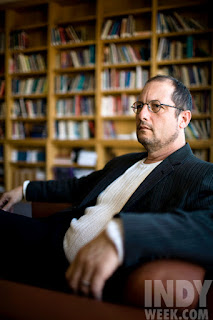
Well-known Christian philosopher and apologist William Lane Craig, who has debated Ehrman on the historicity of the resurrection of Christ, relays an interview Ehrman gave on a radio show some years ago. Ehrman had just published his landmark work Misquoting Jesus, in which he uses his expertise in New Testament textual criticism to charge that the New Testament is full of inconsistencies and textual errors. He claims that these textual variants dramatically altered and corrupted the original text of the New Testament, and as a result we don't know what the actual early manuscripts really said. In essence, he is saying that the New Testament is corrupt beyond repair. I cannot go into these things now, as this is not a review of Misquoting Jesus, but I will say that Ehrman vastly overstates his case. Let me illustrate with this excerpt from the interview Ehrman did on his new book.
Interviewer: "Dr. Ehrman, after writing Misquoting Jesus, what do you think the New Testament text really said, originally?"

Well-known Christian philosopher and apologist William Lane Craig, who has debated Ehrman on the historicity of the resurrection of Christ, relays an interview Ehrman gave on a radio show some years ago. Ehrman had just published his landmark work Misquoting Jesus, in which he uses his expertise in New Testament textual criticism to charge that the New Testament is full of inconsistencies and textual errors. He claims that these textual variants dramatically altered and corrupted the original text of the New Testament, and as a result we don't know what the actual early manuscripts really said. In essence, he is saying that the New Testament is corrupt beyond repair. I cannot go into these things now, as this is not a review of Misquoting Jesus, but I will say that Ehrman vastly overstates his case. Let me illustrate with this excerpt from the interview Ehrman did on his new book.
Interviewer: "Dr. Ehrman, after writing Misquoting Jesus, what do you think the New Testament text really said, originally?"
Ehrman: "I don't understand what you mean...what are you talking about?"
Interviewer: "Well in your book you say there are all of these textual variants and corruptions that have crept up into the text to the point of the overall message being largely obscured. If we can't know what the original text really said, as you have written, then what do you think the New Testament actually DID say?"
Ehrman: "Well, it said pretty much what we have today!"
The interviewer was dumbfounded. "But I thought it was all corrupt?"
Ehrman: "Well, we have been able to re-establish the text as New Testament scholars."
There you have it. Bart Ehrman contradicting the overall thrust of the book he was trying to sell. Why do i mention this? I mention this because I want to point out that Ehrman sometimes has an overall agenda (which includes selling books) and that he is not always honest about his arguments and positions. Craig calls the dishonest side of Ehrman "Bad Bart", or the "Popular Bart". Bad Bart knows he is being purposely misleading while "Good Bart" (or 'Scholarly Bart') will come clean if pressed. And just as an aside, the New Testament has been found to be ninety-nine percent accurate in the original manuscripts, with only one percent of textual variables that affect virtually no doctrine of the Christian faith (William Lane Craig). Good Bart knows this.
Ehrman is one of the leading proponents of New Testament skepticism today, publishing more than twenty books addressing all kinds of New Testament topics. His works appeal largely to the biblically illiterate who have long held suspicions that the Bible, and particularly the New Testament, are at best fundamentally flawed, and at worst, utterly corrupt. One of his strengths is in being able to distill scholarly and complex material down to a level that ordinary lay folk and young students can understand. This is one of the reasons his books are so dangerous: they shake the faith of uninformed believers in the bible and confirm the long held views of skeptics who like to trash the Bible as inconsistent, incoherent, and untrustworthy. And yet Ehrman is not a historian; he is a textual critic. He has never, ever written a single book on scholarly commentary, and he has never written a book on any variation of New Testament exegesis. He is also not a theologian. In the guild of the Society of Biblical Literature he is a specialist in textual criticism, but even in this area he does not represent what would be considered a majority view among his peers. It is puzzling why he could write a book like Jesus, Interrupted, when he has never, particularly with this book, engaged in any in-depth interaction with exegetes, theologians, and even most historians of the New Testament, Christian or non-Christian. Ehrman is simply writing this book on the fly, and it is one that could probably have been written by a graduate-level neophyte, given just a little research.
In the first chapter of Jesus, Interrupted, he bemoans the fact that the majority of people, including the church, have been deceived into a sort of cover-up about what "scholars have been saying" for over a hundred years about the Bible. He tells us: "The perspectives that I present in the following chapters are not my own idiosyncratic views of the Bible. They are the views that have held sway for many, many years among the majority of serious critical scholars teaching in universities and seminaries of North America and Europe" (p.2). Ehrman would probably be better served in qualifying that statement with, "the majority of serious critical scholars that I agree with teaching in universities and seminaries of North America and Europe." Concerning these broad claims, notable New Testament scholar Ben Witherington III writes,
"Now it is always a danger to over generalize when we are dealing with as important a matter as the 'truth about the Bible'. And frankly it is simply untrue to say that most scholars or the majority of Bible scholars or the majority of serious critical scholars would agree with Bart Ehrman in his conclusions about this or that NT matter." Now, it is very understandable that a textual critic like Bart would write a book like Misquoting Jesus, when it is in his purview and area of expertise. However, as Witherington goes on to say, it is "mystifying why he would attempt to write a book like Jesus, Interrupted which frankly reflects no in-depth interaction at all with exegetes, theologians, and even most historians of the NT period of whatever faith or no faith at all."
Interestingly, the footnotes in this book reveal mostly cross-references to Ehrman's earlier works with a few exceptions, one being a scholar who is now dead and another who has long since been retired. This is indeed suspect on his part, and highlights the notion that perhaps Bart is relying on trinkets of information he learned while at Princeton Seminary. In fact, as we shall see, Bart reads the Bible with the same sort of flat literalistic hermeneutic that he would have used before he did his scholarly study of the text. He judges ancient texts on the "basis of modern presuppositions about history writing, and what counts as truth and error" (Witherington). In other words, he reads the texts through a modern filter with no consideration of how the ancients used to write in their particular culture and with their literary nuances. The ancients wrote their historical accounts very different from how we write ours today, and if one is to study their writings, they need to be prepared to consider all things.
On Angel, Or Two?
I will begin by providing a classic example of the unfortunate wooden literalistic
lens Bart uses as he attempts to extract contradictions from the
biblical text. In the gospel accounts of the angels appearing to the
women after Jesus' resurrection on Easter morning, he lasers in on what
he deems an irreconcilable contradiction. For example, he points out
that Mark says the women saw only "a man" at the tomb, while Luke says
"two men" were seen, while Matthew says an angel appeared to them. He
claims then that since Mark and Luke refer to the angels as "men",
therefore it must be a contradiction because an angel can't be a man,
and a man can't be an angel, right? This conclusion that Ehrman reaches
is highly problematic and decidedly naive. First of all, as Ehrman being
an expert in the New Testament should well know, Luke (himself a Gentile), refers to the
angels as men likely because he was writing his gospel for a largely
Gentile audience. The Gentiles were more akin to worshipping angels and
giving them undue reverence, so Luke merely attends to this pagan
tendency by describing the angels as men, as no doubt they looked like
men. This is common in the Bible. In fact, as Ben Witherington points
out, Bart
"ought to know that with regularity in the OT and in Intertestamental literature, angels are called and described as men (see e.g. Dan. 9.21; 10.5; 12.6-7). This sort of descriptor is particularly common in Jewish apocalyptic texts like Daniel and like Mark’s Gospel itself."
Indeed, over and over again, especially in the Old Testament, angels take the form of men in order to serve God's purposes for the given situation. Witherington goes on to state that "again we are dealing with a wooden sort of literalism on Bart’s part that does not take into account the larger context of such ‘angelic’ material in early Judaism." Secondly, Bart should well know that just because two angels appear in one account, and just one in the other does not necessitate a contradiction, because, after all, where there are two angels, there is surely one, and in ancient texts such as these the spokesman is quite often the only person (or angel) mentioned. Again, these gospel accounts are supplemental, providing details that are unique to their respective descriptions. It is almost embarrassing that Ehrman should overlook these facts. He glosses over them by not doing the necessary research. I present this example because it is so indicative of other blunders he makes in this book when trying to discredit the New Testament he is supposed to be fluent in.
Jesus: Cool, Calm, and Collected?: Mark vs. Luke
As the centerpiece of this critique of Jesus,Interrupted, I would like to provide a researched analysis of one of the key postulations Ehrman uses to establish the idea of how the Bible, and the NT in particular, are hopelessly contradictory and contain irreconcilable passages, particularly in the Gospel accounts. My aim here is to provide an example of how he misreads, misunderstands, and misapplies important information as he tries to break down the text to make his case. The passages in question are the two accounts of Jesus' death in Mark and Luke. Ehrman claims that the two are contradictory and hopeless divergent in their details. He refers to the Lukan Jesus as being calm and in complete control of the events during and leading up to His crucifixion. He gives the impression that Jesus in Luke is imperturbable, while in Mark, Jesus is, in essence, out of control, in horrible distress, and dies in complete agony, "unsure of the reason He must die" (p.66). Ehrman goes on to put it this way: "...the point is that Jesus has been rejected by everyone: betrayed by one of His own, denied three times by His closest follower, abandoned by all His disciples, rejected by the Jewish leaders, condemned by the Roman authorities, mocked by the priests, the passersby, and even by the two others being crucified with Him. At the end He even feels forsaken by God Himself. Jesus is absolutely in the depths of despair and heart-wrenching anguish, and that's how He dies" (p. 66). Now, these details are all true. Mark does portray the last hours of Jesus as bleak and anguished. But then Ehrman postulates that when we combine both the Markan and Lukan accounts, we see a Jesus who is somehow "all things at once", both in agony, and also in control. Ehrman does not allow for the two accounts to represent supplementary details or nuance. He assumes that the gospels are meant to be photographs rather than portraits of interpretive art. Unbeknownst to Ehrman, this was how the authors wrote. Witherington explains:
"It is a classic error to mistake the part for the whole, or to assume that two different angled interpretations are meant to represent the same instance. Neither of these assumptions are warranted. Luke gives us more of what Jesus said on the cross, Mark, considerably less. It is perfectly possible that Jesus went through a gamut of emotions on the cross, moving from God-forsakenness to acceptance, to forgiving others etc. Any one who has done some counseling and pastoral work with the dying knows that a dying person does indeed often go through a variety of responses to his demise, even in a short period of time. None of these sort of dynamics are taken into account in Bart’s analysis. The Gospel writers are not suggesting Jesus was “all these things at once”. They are presenting different portions or aspects of the crucifixion experience, and nothing more."
It should be noted that Dr. Ehrman seems to believe in a complete, total literary dependence between the Gospel writers. Ehrman assumes Matthew and Luke have Mark in front of them as they write their gospels--while this is probably true, in one sense, it is the motives of the gospel writers in adding their own details or deleting others that he misunderstands. For instance, because Luke chooses to add details to Mark's account, Ehrman assumes Luke is being divergent and contradictory. He forgets that each of the gospel writers are writing to a different audiences, which explains the peculiarities in style and content. He has the idea that Mark and Luke have very different views of Jesus and the manner of His death, but the only way he can have this view is if he is very selective with the information. In doing this, he posits that Mark's Jesus is out of control, not knowing why all these things are happening to Him, while Luke's Jesus in completely in control of all that is happening to Him. He knows He is going to the cross, and He knows why He must go. On p.68 he wrongly assumes that the Gospel writers are portraying Jesus at the exact same moment on the cross. In his analysis, each of the writers are portraying the entire crucifixion experience. This is not the case, and this is one of his key mistakes. I will start my analysis with the culminating event of Jesus' death in both gospels and then work backwards.
In Luke, as Jesus is being crucified, He prays for His enemies. When He is on the cross, He has an interaction with the two criminals crucified beside Him. He says to one of them that he will be together with Him in paradise that very day. In Mark, He is simply hung on the cross and utters the cry of dereliction, "My God, My God, why have You forsaken me?" But let us ask, is Jesus really out of control and utterly forsaken in Mark's account? Let's take a closer look at the events that led up to Jesus' crucifixion. Here is Mark 10:33-35:
"We are going up to Jerusalem," he said, "and the Son of Man will be delivered over to the chief priests and the teachers of the law. They will condemn Him to death and will hand Him over to the Gentiles, who will mock Him and spit on Him, flog Him and kill Him. Three days later He will rise."
Does Jesus really sound out of control of the events that are to come? Here He is predicting that "three days later He will rise from the grave". Clearly, Jesus knows what is happening to Him and He is fully cognizant of His ultimate goal. Let's move on:
Mark 14:8: "She poured perfume on my body beforehand to prepare me for my burial. Truly I tell you, wherever the gospel is preached throughout the world, what she has done will also be told, in memory of her."
In
this verse, Jesus has just been anointed with expensive perfume by a
woman while in the home of Simon the Leper. Some of the people present
protest her action, saying that it was a waste of perfume that could
have been sold for money to give to the poor. Jesus is telegraphing here
that the gospel will be preached throughout the world. In order for Him
to be able to say this, He obviously knows and is in complete control
of the events that would lead up to the culmination of His mission to
die for the sins of mankind, which is the fullness of the gospel. Again,
here is Mark 14:49:
"Am I leading a rebellion," said Jesus, "that you have come out with swords and clubs to capture me? Every day I was with you, teaching in the temple courts, and you did not arrest me. But the Scriptures must be fulfilled."
And Mark 14:27-28: "You will all fall away," Jesus told them, "for it is written: "'I will strike the shepherd, and the sheep will be scattered.' But after I have risen, I will go ahead of you into Galilee."
"Am I leading a rebellion," said Jesus, "that you have come out with swords and clubs to capture me? Every day I was with you, teaching in the temple courts, and you did not arrest me. But the Scriptures must be fulfilled."
And Mark 14:27-28: "You will all fall away," Jesus told them, "for it is written: "'I will strike the shepherd, and the sheep will be scattered.' But after I have risen, I will go ahead of you into Galilee."
Finally, the words of Jesus as he is brought before the Sanhedrin not long before He goes to the cross. The high priest has just asked Jesus if He is the Messiah. Mark 14:62:
"I am," said Jesus. "And you will see the Son of Man sitting at the right hand of the Mighty One and coming on the clouds of heaven."
Isn't it abundantly clear at this point that Jesus knows where He is going in Mark and what will happen? Here He states that the Scriptures must be fulfilled. He is proclaiming that what He is to go through has been predicted hundreds of centuries before and that He is the fulfillment of those prophecies. He knows He will be going to Galilee to meet His disciples after he rises from the dead. And if that is not enough, He announces to His persecutors that He is the Son of God who will be returning someday in great glory. Again, He is utterly in control. Finally, here is a final verse; it is His cry when He is on the cross.
Mark 15:34: "And at three in the afternoon, Jesus cried out in a loud voice, "Eloi, Eloi, lema sabachthani?" (which means "My God, my God, why have you forsaken me?)"
This is Jesus' loud cry in Mark, and in this gospel, the only words He utters. He is, however, quoting psalm 22.
Psalm 22:1: "My God, My God, why have You forsaken me? Why are You so far from saving me, so far from my cries of anguish?" Being a Messianic psalm, this cry (which is merely the first verse in the psalm) is far from a hopeless dive into anguished oblivion. If you keep reading, you find that the psalmist fully expected God to vindicate him. But Ehrman dismisses this idea after first admitting that a
"very popular interpretation of the passage is that since Jesus quotes Psalm 22:1, He is actually thinking of the ending of the Psalm where God intervenes and vindicates the suffering psalmist."
He says that he "thinks" this is "reading way too much into the passage and robs the 'cry of dereliction', as it is called, of all its power." But isn't this just his opinion, and not a literary and historical fact? How can Ehrman say this when it is an important point to be made in supporting his overall argument that Jesus felt completely forsaken by His Father? He is simply basing a big key to his argument on his personal opinion, what he "thinks" is the proper interpretation. It must also be noted that of all the verses I have mentioned above, Ehrman never mentions them,--not in His lectures and not in His books--according to theologian and textual critic James White. Bad Bart or ignorant Bart, I'm not sure which one has surfaced here, but it is clear that he leaves a lot of information out in order to make a point to discredit the New Testament accounts of Jesus. He also does this with the Bible as a whole.
Moving
on, let's look at a couple verses from Luke. It should be noted that
Luke has very similar verses to the ones I have just highlighted from
Mark. For the sake of brevity I will not go into all of them now.
Luke 22:42-44: Jesus prays, (verse 42) "Father, if You are willing, take this cup from me; yet not my will, but yours be done." (verse 43) An angel from heaven appeared to Him and strengthened Him. (verse 44) And being in anguish, He prayed more earnestly, and His sweat was like drops of blood falling to the ground."
Luke 22:42-44: Jesus prays, (verse 42) "Father, if You are willing, take this cup from me; yet not my will, but yours be done." (verse 43) An angel from heaven appeared to Him and strengthened Him. (verse 44) And being in anguish, He prayed more earnestly, and His sweat was like drops of blood falling to the ground."
It must be noted that verses 43 and 44 are major textual variants, which means that there is a likelihood that they are to be rejected as not reliable. The textual critic in Ehrman would know this, and he wastes no time in pointing this out. But even without verses 43 and 44, one can observe that Jesus is still suffering anguish. James White points out that just because Luke presents different (and perhaps less "negative") information than Mark when presenting the events leading up to and during Jesus' crucifixion, doesn't mean he is simply contradicting Mark. The Christian community would have well known that Jesus was suffering anguish (as in Mark), as verse 22 illustrates when He asks His Father to take this cup of suffering from Him. Even if we did not have verses 43 and 44 we would still know what was going in this account of Jesus' anguish in the Garden of Gethsemane. White says that you would have to read Luke totally by himself, way out on a deserted island to come to the conclusion that Jesus experiences almost zero suffering in this gospel. And this is what Ehrman assumes. White also points out that the contradiction between Mark and Luke in this area is not due to the biblical text, but due to Ehrman's misreading of the text. A fair reading of the text reveals Ehrmans bias and selective reading of the gospels as we have just seen.
Finally, Mark does not portray a Jesus who is completely out of control, particularly in the events leading up to his crucifixion. Ehrman is simply wrong, and it is puzzling how he could gloss over this information so broadly. A fair reading of these Markan and Lukan texts reveals Ehrman's bias and selective reading of these texts. Not one of the Gospel writers is pretending to present an exhaustive account of what happened. And all of the Gospel writers are writing from a particular angle of incidence, a particular point of view. They have their own themes and theses they wish to highlight and like other ancient biographers and historians they assume a certain amount of literary license and freedom in editing and arranging their material (Witherington). Ehrman should know this if he is to be qualified to write Jesus, Interrupted.
What Time Was Jesus Crucified?
Let
me present yet another example of one of the differences between a
couple of the gospels that Dr. Ehrman labels an all-out contradiction.
The alleged contradiction is between Mark 15:25 and John 19:14. The
charge is that Mark presents Jesus being crucified while John presents
Him in the midst of His trial during the same time He was being
crucified in Mark. They can't both be right, can they? This is what
Ehrman says about this matter:
"After the meal they go out. Jesus is betrayed by Judas, appears before the Jewish authorities, spends the night in jail, and is put on trial before Pontius Pilate, who finds him guilty and condemns him to be crucified. And we are told exactly when Pilate pronounces the sentence: ‘It was the Day of Preparation for the Passover, and it was about noon.’ (John 19:14) Noon? On the Day of Preparation for the Passover? The day the lambs are slaughtered? How can that be? In Mark’s Gospel, Jesus lived through that day, had his disciples prepare the Passover meal, and ate it with them before being arrested, taken to jail for the night, tried the next morning, and executed at nine o’clock A.M on the Passover day. But not in John. In John, Jesus dies a day earlier, on the Day of Preparation for the Passover, sometime after noon. I do not think this is a difference that can be reconciled.” (pg. 26-27)
After digging into this issue a bit, one can find that both Gospel writers are correct in their respective accounts. Why is this so? Because each author used a different time system. Mark chooses to follow the Jewish time system, while John uses the Roman time system. According to Jewish reckoning, the 24 hour period began in the evening at 6 pm and the morning of that same day at 6 am. According to Roman time, the day ran from midnight to midnight. Noted theologian Dave Lester explains,
"Therefore, when Mark asserts that at the third hour Christ was crucified, this was about 9 am. John stated that Christ's trial was about the sixth hour. This would place the trial before the crucifixion and this would not negate any testimony of the Gospel writers.” Lester goes on to add, "this point by Geisler and Howe makes perfect sense. Mark was the first gospel and may have been written when the early Christian church was largely Jewish. The gospel of John is universally accepted as being written later (possibly in the 80s or 90s) when there would have been more Gentile converts."
This is just another example of Ehrman not checking his facts and crying out "Contradiction!" when there is none.
The Creed of All Creeds
Dr. Ehrman likes to pound the idea, over and over again, that the gospels, as we have them, are hopelessly corrupted because they contain stories that been "in oral circulation for decades before being written down," making it "very difficult to know what Jesus actually said, did, and experienced" (p.274). He uses the example of the children's game of "Telephone", where your friend whispers something in your ear who whispered something in another friend's ear, and on it goes, until you end up with a very different message at the end of the game than at the start. The message is no longer accurate because it had been passed on so many times that errors have crept in. Ehrman says this is why the gospels are so corrupted. He adds this:
"Scholars have devised ways to get around these problems, but the reality is that the Jesus portrayed in the Gospels (for example, the divine being become human in the Gospel of John) represents a later understanding of who Jesus was, not a historical account of who He really was" (p. 274).
In response to this (at least in partial response), I would just like to point out something Ehrman, to my knowledge, never acknowledges in his writings. It is the "Apostle's Creed", the early church creed that the Apostle Paul writes in his letter to the Corinthians (1 Cor. 15:3-7):
"For what I received I passed on to you as of first importance: that Christ died for our sins according to the Scriptures, that He was buried, that He was raised on the third day according to the Scriptures, and that He appeared to Cephas, and then to the Twelve. After that, He appeared to more than five hundred of the brothers and sisters at the same time, most of whom are still living, though some have fallen asleep. Then He appeared to James, then to all the apostles, and last of all He appeared to me also, as to one abnormally born."
The story behind this creed is very compelling indeed, because it's origin possibly goes back to within years of Jesus' resurrection. This creed authenticates the resurrection of Christ in many ways, including the fact that its very early eyewitness testimony precludes any possibility of "legendary accretion" (Clarke). New Testament Scholar and expert on the resurrection Gary Habermas, in an interview with Lee Strobel (author of The Case for Christ),
shows that "Paul is in fact quoting a very early creed of the Church. First, he says, Paul uses the terms translated "received" and "handed on" as technical rabbinical language for the passing on of sacred tradition. The text is also in "stylized format, using parallelism, presumably to aid memorization." The use of Peter's name in Aramaic (Cephas) is likely a sign of a more primitive date. The creed also uses phrases not common in Paul's writings: "the Twelve"; "he was raised"; "the third day". Habermas goes on to note that scholar Ulrich Wilkens says that it "indubitably goes back to the oldest phase of all in the history of primitive Christianity" (Strobel, The Case for Christ, p. 230).
Habermas, among others, contends that this creed could possibly have been written within mere months after the resurrection of Jesus.
"Since no respectable scholar disputes that Paul wrote 1 Corinthians, which was written between 55-57 AD, this becomes clear as a likely possibility. Paul says in verse 15:3 that he passed the creed on to the Corinthian church in the past at some point, thus predating his visit there in 51 AD. This places the writing of the creed no later than within 20 years of the original Easter event."
But Habermas, among others, think that the creed goes back even further, to between 32-38 AD, in Jerusalem most likely when Paul received it. Since it was three years after Paul's conversion when he travelled to Jerusalem to interview the Apostles Peter and James, Habermas draws our attention to the fact that,
"when Paul describes this trip (Gal. 1:18-19), he uses the Greek word historeo. This word indicates a thorough investigation of the facts surrounding Jesus' resurrection was being made. "So in all likelihood, this creed was delivered to Paul by the eyewitnesses of the resurrected Christ: Peter and James."
Furthermore, the creed mentions numerous other Easter eyewitnesses including Christ's appearing to more than 500 people at once--"most of whom are still living" at the time Paul wrote 1 Corinthians. Here Paul is setting forth the facts and daring any skeptics to interview these eyewitnesses. This creed authenticates the resurrection of Christ and is something that I've never heard Ehrman mention before. Like many liberal scholars of his kind, he likes to ignore credible evidence such as this and claim a late dating of the gospels' compositions with the notion that legendary material must have polluted the waters.
Conclusion
In this critique I believe I have demonstrated beyond a shadow of a doubt that Bart Ehrman's claims about the New Testament being utterly corrupt and full of contradictions should at least be rigorously challenged. I have only been able to provide a few examples that demonstrate his errant thinking on such matters, but my aim was to show through these examples that Ehrman's lens is tainted when he approaches various passages of Scripture for analysis. Since I am able to readily point out his exegetical errors in just 3 examples, we should be able to deduce that he is likely making similar mistakes in others. But let it be said that Ehrman does bring up interesting points and says some things that are indeed true. There are some difficulties that can be found in the New Testament, which should lead us on to diligently study the Scriptures for ourselves and find answers.
Far from being an idiot, Ehrman is very learned man and scholar, but in Jesus, Interrupted he has jumped into waters he is not qualified to jump into. Bible-believing Christians should not fear him, but those who are younger in their faith should be wary of his arguments and consult credible NT historians and theologians for help if they get swept into the flood of Ehrman's persuasive rhetoric. If they dig a little deeper, they will likely find what I have found: biased and sometimes dishonest argumentation. Since Jesus, Interrupted, Ehrman has continued to write and heartily sell books that climb the charts of popularity. I hope that someday he will return to the faith he has rejected.

Comments
Post a Comment